 Jane Hill
When it comes to production downtime, an ounce of prevention really is worth a pound of cure. The right electrical preventive maintenance checklist, done in the right way, at the right intervals. It stops catastrophic failures caused by electrical problems before they cause damage, saving money in the long run through improved plant safety and reliability.
Thermal Imaging Before Anything Else
The first order of business for a thorough switchboard inspection isn’t a toolkit bag, actually. It is a thermal camera. Thermography uncovers hotspots that remain totally invisible under regular conditions: Overloaded circuits, resistive connections, and unbalanced loads all appear as temperature irregularities long before they become fires or fault trips.
This is not a once-and-done job. In plants with a continuous process or heavy motor loads, quarterly thermal scans are in order. What you are on the lookout for are temperature differentials. A connection that’s running 15°C hotter than its neighboring terminals should be a red flag, even if it appears structurally sound.
Harmonic distortion is worth looking at as well. Industrial plants with variable speed drives and non-linear loads create electrical noise that does not trigger any breakers but does steadily overheat busbars and neutral conductors. A PQ meter during regular operating hours will inform you whether harmonic content is already pushing your switchboard over its limits of design.
Control Cabinet Hygiene and PLC Protection
Dust acts as a conductor. If too much of it gets inside a control cabinet that’s powering a PLC or tying into a SCADA system, the contamination provided by particulate matter is a root cause of short circuits and rapid copper corrosion on terminal blocks and card edge connectors. This may be the most common cause of PLC failure, and it’s totally avoidable.
Cabinet cleaning should occur on a defined frequency, not whack-a-mole. That frequency also lets you do other things, like replacing air filters and using either dry compressed air or an anti-static vacuum cleaner on the boards. You can also check to ensure that the exterior is properly sealed. The IP rating primarily specifies the electrical “Ingress Protection” that the cabinet was designed to provide. It does not describe the effectiveness of a sealing gasket that’s been mashed flat over the past half-decade.
While the cabinet’s open, check to ensure that the Uninterruptible Power Supply protecting the control logic is actually in good working order. One that’s been on bypass for months doesn’t power much when a voltage sag happens during a critical sequence.
Mechanical and Connection Integrity
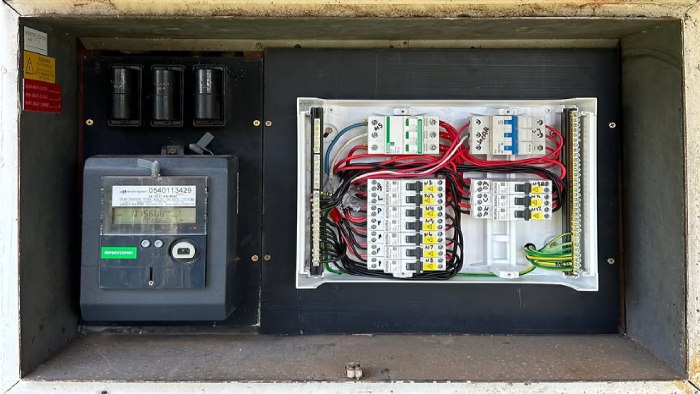
Industrial settings can cause a lot of vibrations, which may lead to issues like loose connections in electrical switchboards. Such a situation may potentially cause electrical fires if not detected and fixed on time. The only way to identify and prevent this issue is by torque testing, i.e., re-torquing the connections to the manufacturer’s given torque values.
Similarly, older breakers are in need of regular maintenance checks where they are mechanically exercised. This is because over time, the internal lubricants tend to break down and solidify, causing them to get stuck. This simple maintenance check can help ensure the safety of your electrical system, because if a breaker fails to trip during a fault, downstream protection will become ineffective.
Moreover, RCDs and arc flash mitigation procedures should not be ignored. For instance, during every maintenance cycle, you should test RCDs and ensure that arc flash labels on panels are updated regularly based on your most recent incident energy calculations. Check these especially if you have made changes to your system’s fault current levels or upstream protection.
Compliance Documentation and Grounding
A commercial electrician sydney performing a compliance audit will want to see current electrical schematics that match the physical installation. In most industrial facilities, those two things have drifted apart. Every maintenance cycle should include updating single-line diagrams, verifying that all circuits are correctly labeled, and confirming that any modifications made since the last audit are documented. This isn’t paperwork for its own sake; during emergency troubleshooting, an accurate schematic is the difference between isolating a fault in minutes and guessing in the dark.
Grounding and bonding deserve their own checklist item. Stray currents from improperly bonded equipment are a known cause of PLC input card failures and corrupted SCADA data. Check earthing connections at the switchboard, at motor frames, and at any control panel that interfaces with field instrumentation.
Verify that all work complies with applicable wiring standards for your installation type and jurisdiction. These standards define minimum requirements, not targets; your maintenance program should exceed them where operational risk justifies it.
Maintenance as a Risk Management Decision
Facilities that effectively manage industrial electrical maintenance view it as a risk assessment, not something they’re doing to check a box for compliance. They understand what equipment is essential, which failures will impact other systems, and what parts are statistically reaching the end of their useful life.
They plan for thermographic inspections, torque, and breaker testing because they know what these costs will be in advance, and they also understand the potential cost of failing to complete this work. This type of risk assessment doesn’t mean you must have a full-blown reliability program. It simply requires that you approach your maintenance checklist as the critical engineering document it is.