
 Kirsty Wark
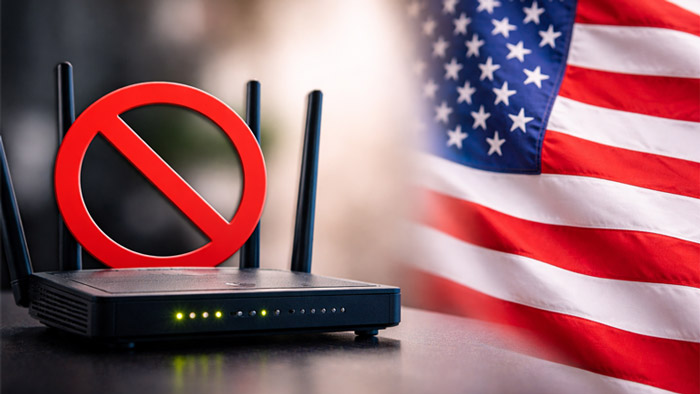
The Federal Communications Commission on Monday added all foreign-made consumer routers to its Covered List. The federal government’s active blacklist of communication routers and equipment is seen as a national security risk. This move effectively blocks the sale of new WiFi routers made outside the country.
On 20th March, 2026, the FCC released a National Security Determination saying that cyberattacks have “more and more used the weaknesses in small and home office routers made abroad.” The determination also said that “routers made abroad were directly involved in the Salt Typhoon, Volt, and Flax cyberattacks, which targeted key American communication, transportation, energy, and water systems.”
Why the USA Banned Foreign-Made Routers?
“Bad people have used security loopholes in foreign-made routers to attack American homes. These support spying, break up networks, and help steal intellectual property,” the FCC wrote.
The Executive Branch determination noted that foreign-made routers, first, create “a supply chain weakness that could harm the U.S. economy, critical infrastructure, and national defense,” and second, pose “a serious cybersecurity risk that could be used to quickly and badly disrupt U.S. critical infrastructure and directly hurt U.S. people.”
Bogdan Botezatu, director of Threat Research at cybersecurity firm Bitdefender, says this ban is a step to improve the cybersecurity readiness of U.S. households, given ongoing global tensions. “Consumer routers sit at the edge of every home network, which makes them an appealing target and a strategic risk if they are compromised on a large scale,” he says.
Which Routers Are Banned in USA?
The ban is very wide because nearly every consumer router on the market today is made overseas. The FCC’s meaning of “produced” is purposely broad. It covers not only where a device is physically put together, but also where it was designed, developed, or where any major part of the manufacturing process was finished. So, a router designed in the United States by an American company but assembled in Taiwan would still be banned.
In practice, the ban will affect all home router brands. That includes Netgear, which is based in San Jose; Asus, which is Taiwanese and makes products abroad; Eero, which is owned by Amazon and made in Vietnam, and Ubiquiti, another American company whose hardware is made overseas.
What About Existing Routers?
The FCC also said that WiFi routers approved earlier can still be used and sold. Today’s step does not change a buyer’s right to keep using routers they have already purchased. Nor does it stop retailers from continuing to import, sell, or market router models that were previously approved through the FCC’s equipment authorization process.”
The FCC also issued a waiver that allows existing foreign-made routers to keep receiving software updates. The ban will focus on new or future Wi-Fi router models made outside the U.S. to reduce cybersecurity risks from weak networking equipment.
Are Any Routers Manufactured in the US?
The only routers made in the U.S. are some Starlink Wi-Fi routers, which are mainly produced in Texas. Starlink is part of Elon Musk’s SpaceX company, but many parts of these routers come from East Asia.
Can Banned Routers Get Approved?
Some routers may be exempted from the list if the Department of Defense or the Department of Homeland Security considers them acceptable. To get that approval, companies making routers outside the U.S. must apply for conditional approval in a process that requires them to reveal the company’s foreign investors or influence, along with a plan to move router production to the U.S.
“No routers or makers have been given Conditional Approval yet, but as the process moves ahead, we expect approvals to come in good time,” an FCC speaker tells WIRED.
How Will the Router Ban Impact Ordinary Folks?
“This decision could greatly shake up the U.S. router market for buyers,” Brandon Butler, a research head for Network Systems and Services at IDC, tells WIRED. “In the short run, much will depend on how fast conditional passes are handled. Most sellers will likely go after them, but any wait could cut supply and push prices up.”
Botezatu says consumers should “stay with well-known makers that have a good history of sending out updates and taking care of their products. Check that your router is still supported and is running the latest firmware.”
Unless you truly need to upgrade your Wi-Fi router, your current model is enough for your speed and security needs for now. However, you may want to wait before buying a new one until the new approved models are available.