 Kirsty Wark
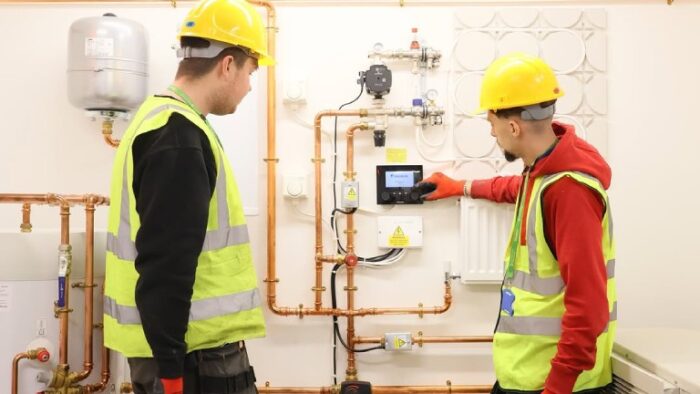
Facility managers responsible for commercial or industrial heating plants often treat safety procedures as part of a routine maintenance schedule. They may not view them as an essential risk management strategy. This can be a dangerous oversight. Large systems operating under constant pressure and heat can fail in ways that go far beyond regular HVAC systems.
Why Large-Scale Heating Systems Demand a Higher Standard of Care
So let’s discuss it in full detail.
1. Lockout/Tagout Before Anyone Opens a Panel
Before any engineer lays a hand on the boiler or burner system, all electrical power and fuel supplies serving that unit should be physically isolated and locked out, aka Tagged Out. Lockout/Tagout (LOTO) isn’t optional paperwork. It is the line between a controlled shutdown and an incident.
For Type B gas appliances, which are the large-scale industrial units needing individual certification and having dedicated safety logic, this means locking out the main gas isolator, locking out the electrical panel of controls, and locking steam or water connections as necessary. One lock per isolator. One isolator per responsible person. One responsible person per lock on everything in the system.
The system doesn’t restart until the person who placed it there has accounted for every lock. This means that you not only need to have every lock documented in your site’s LOTO register, but you also need to audit.
2. Pressure Vessel Integrity Requires More Than a Visual Inspection
Approximately 30% of boiler-related accidents can be directly attributed to safety valves and low water cut-offs failing (National Board of Boiler and Pressure Vessel Inspectors). That is a significant statistic because both are the last line of defense between a ‘good as new’ pressure vessel and the raging inferno that can be caused by its failure.
Those are fairly solid reasons for having regular, preferably annual testing and assessment carried out by a qualified inspector. Complex Type B systems and high-output plants require a dedicated Commercial Boiler and Burner Service Canberra to ensure compliance with pressure vessel regulations and the technical requirements of installations governed by AS 3814 and related Australian Standards. Safety valves and water cut-offs are designed to catch failures that begin at the pressure vessel level. Those are failures you will not see coming because they make no changes to any operational characteristics.
Then, let’s talk about scale for a moment. If you keep a combustion log (which notes the percentage of excess air in the combustion process and the temperature of the flue gas stack), you will, after a while, notice a pattern of increasing stack temperatures while load demand remains constant. That’s scale building up between flames and water, and it is creating a significant increase in metal temperature for the exchanger. That’s a problem in two ways: first, because the efficiency of the unit is dropping, and second, because that unit is being placed under far more stress than it was designed for, which leads ultimately to metal fatigue.
3. Flame Safeguard Testing isn’t Optional every quarter
The flame safeguard watches to see if a flame is burning after ignition. If it goes out, it’s supposed to close the fuel valve within seconds. If it does not, raw fuel is dumped into the furnace, and the next time the igniter tries to spark, you have got an explosion.
Quarterly testing of flame failure response time is a minimum, not a high bar to shoot for. You are verifying how fast the system reacts, not whether it does. Slow response, even a few seconds over what your manual says it should be, means that relay contacts in the system are wearing, sensors are getting dirty, or the controller’s software is corrupting. None of these conditions raise their hands and shouts “me, me” when the system is running. Only a timed test will catch them.
Pair this with the purge cycle verification. The pre-ignition purge clears residual combustible gas from the furnace before any spark is attempted. A purge cycle that’s too short, or that a faulty controller skips entirely, removes the single most important pre-ignition safeguard.
4. High-Limit Controllers and Safety Relief Valves Work as a System
The high-limit temperature controller is a stand-alone safety device, not a high thermostat, not a redundant version of the primary control. If the primary thermostat fails to break the circuit to the burner and temperatures continue to climb, the high-limit controller is your last line of defense from a dry-fire situation that can destroy the heat exchanger in minutes.
Verify calibration of high-limit controllers on every scheduled service visit. A controller that has drifted even a little above its rated trip point will not be there when you need it. Safety relief valves (SRVs) should also be replaced, not rebuilt; they are mechanical devices used to vent overpressure to protect the vessel from going over the design pressure. If an SRV has been weeping or if it has been manually cycled due to normal operation, replace it. An SRV that has been partially cycled while under pressure may not reseat.
5. Legionella and Carbon Monoxide Are Parallel Risks, Not Afterthoughts
If you operate a large-scale hot water system, you are obliged to consider its Legionella risk, and thermal management is your only option for controlling that risk. Storage and distribution temperatures must be kept within specific ranges to prevent the multiplication of bacteria. This requires documented temperature monitoring and regular thermal disinfection of the entire system, not just a note in the commissioning file.
Carbon monoxide monitoring in mechanical rooms is equally non-negotiable. Combustion analysis should be performed at each service to verify CO levels in the flue gases and identify incomplete combustion before it becomes an ambient hazard.
These are not compliance boxes. They are the difference between a plant room that operates safely for decades and one that becomes a liability.