
 Kriti
Kriti
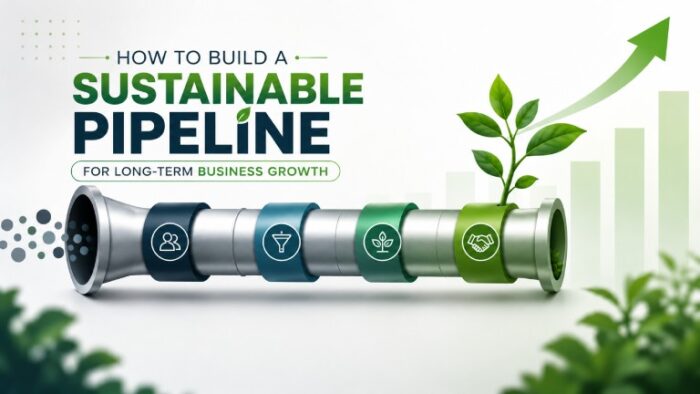
Having 100 people in your sales team doesn’t matter if they are not supported by the right processes for targeting, evaluating, and pursuing opportunities. “Quantity over quality” never wins the constant-growth game.
Diversify Your Lead Sources Before You Need to
Many companies rely too much on just a few channels. A referral network is successful until one important contact leaves the job. An inbound content strategy brings in leads over time, but as soon as you stop implementing it, you lose momentum. When one or the other becomes less reliable, the funnel doesn’t just become thinner; it dries up.
The solution is to deliberately diversify. Passive inbound funnels, SEO, content, and social will solidify your reputation and drive down your CAC for the leads they do deliver. Active outbound funnels, strategic networking, or replying to formal tenders, will get you in front of the opportunities that inbound can’t predict. Neither can, nor should, replace the other.
Move From Informal Sales to Formal Contract Acquisition
There are limits to what you can achieve with relationship-based selling. To grow, you will eventually need to win contracts through a formal process. Tenders, RFPs, and the like are the lifeblood of multi-year revenue. Plus, the clients you gain this way are usually the stickiest. They may not necessarily be the most profitable, but they’re definitely the best for stabilising cash flow.
The problem is, most companies have no concept of a proposal and bidding process. The template they use to present a proposal looks very similar to the template they use to bid on a contract: the blank Word version of their sales PowerPoint. Well, whatever works! Right?
Except that it really doesn’t hold up when you run into another company that is disciplined in the way it bids. That’s what the big players moving into your market do, isn’t it?
The step-change bid process users enjoy a 40% to 50% higher chance of success. That’s the latest data from Shipley Associates, anyway. So, if you’re sick of getting beaten by companies that clearly don’t offer half of what you do, working with PitchThis bid writers to professionalise your approach might be long overdue.
Qualify Harder, Earlier
A hundred leads that all turn out to be duds cost you more than just the lost time on twenty good leads. Nearly every company that eventually establishes a reliable lead-nurturing process has come to this realization after multiple salespeople each spent a quarter of the year chasing a deal that died because the opportunity wasn’t real.
A formal qualification process helps to alleviate this. Giving your team criteria like BANT (Budget, Authority, Need, Timeline) or GPCT (Goals, Plans, Challenges, Timeline) to establish the quality of a sales opportunity may not sound quite as sexy as a pipeline full of a hundred seemingly red-hot leads, but it will keep your salespeople free to focus their time on the twenty potential deals that truly are. The goal of pre-qualification isn’t to create scapegoats to blame for diminishing the sales pipeline; it’s to safeguard your team’s time for genuinely good leads.
Build a Feedback Loop From Every Lost Bid
Successful businesses don’t just file a lost bid and move on. They treat every loss as data.
The formal tender that was unsuccessful, request debrief feedback wherever the process allows it. The sales conversation that ended without a conversion, do your best to understand why. Over time, those losses will likely point to something: a value proposition that just isn’t landing, pricing that is consistently ‘a bit high’, or capability gaps that you will never get to make up before winning a contract and disappointing somebody.
That loop will let you steadily improve your win rate. It’s not as fun as pumping everybody up and moving onto the next bid, but it is what will actually help you win more often in the real world.
Protect the Clients You Already Have
We tend to focus more on acquiring new customers rather than retaining the ones we have. We only pay attention to customer retention when it becomes impossible to ignore the high rate of churn.
Maintaining a healthy pipeline is not only about bringing new leads in but also about retaining and growing your existing customers. If you lose customers at the same rate you gain them, you’re just treading water. In many industrial and B2B sales, existing customers have latent potential to buy more from you.
Regularly review your current customer base and look for potential needs that your product can fulfill. A good CRM system will help you store and manage this valuable information so that you can access it at the right time. A CRM system can make or save you lots of money in this respect when it brings up a contract or account for renewal that might have slipped your mind.
The pipeline is not just a device that aims to coerce sales from customers, though some can end up feeling that way if managed poorly. The pipeline is the design pattern for how you’re growing your business, and how long you expect that growth to continue.