
 Jeremy Bowen
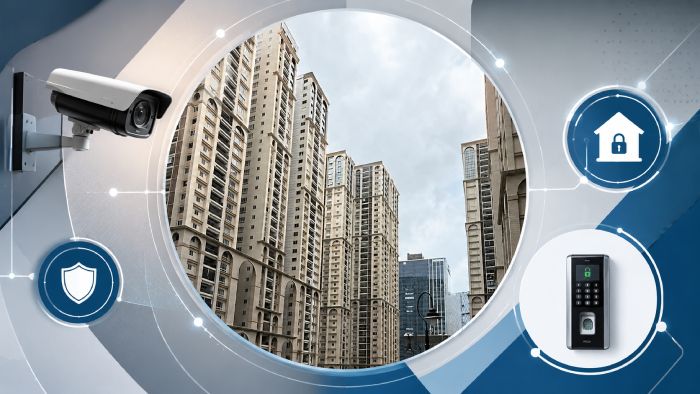
Most facility managers believe that in order to automate things, they must begin from scratch. That is not the case. A wiser approach is to consider your current systems as the basis for automation, not a hindrance. Adding automation on top of your existing systems is less expensive, less invasive, and often faster than completely renewing everything.
The catch is that you need to know what kind of shape your current infrastructure is in before you get started on any new purchases.
Run a gap analysis before spending anything
Before you even think about contacting a vendor, you’ll want to perform a scrupulous audit of every piece of hardware currently in your building. Now, more than likely, your organization has grown in fits and starts over the years. That means your cameras, locks, alarm panels, and sensors probably come from a variety of vendors and years: some might be 30-year-old analog cameras, others might be the latest-and-greatest IP multi-megapixel lenses on the market. Some might be networked, while others might not.
To determine what will stay and what will go, you need to make the distinction between what is analog and what can be made IP-enabled and networked. This means categorizing your systems and hardware. Understanding how to upgrade building security without discarding functioning equipment is the practical skill that separates a good integration from an expensive one. It’s the starting point for every other important integration decision that follows.
Replace siloed apps with a single dashboard
Many buildings have different software managing alarms, cameras, and access records. This software operates separately, requiring different logins and interfaces for each. That lack of cohesion isn’t just inconvenient. An alarm being triggered by one system doesn’t send an alert to the other standalone system that covers the same area.
A unified security platform fixes this by bringing all streams together under one interface. This reduces the need to have three security people for three subsystems, freeing you to move teammates to tasks that generate more value. Nearly half of all security professionals are now focusing on cloud-based or hybrid-cloud security solutions that connect data across systems. It makes sense – when your solution can consolidate and share data, your cameras, doors, and more can start collaborating autonomously. Event-based triggers become possible. For instance, when an external door is forced open, you might have the system auto-pivot the nearby PTZ camera and start recording. This is two systems talking to each other.
Build automation that adjusts to occupancy
Having the same motion sensitivity, alerting procedures, and lighting/noise responses at 3 am as you do at 1 pm are an overreaction waiting to happen. You should be able to knowingly “underreact” when the building is known to be unoccupied and reserve your real concerns for after-hours reports of real occupancy.
Plan for network failure before it happens
Automation that relies on live web connectivity is very risky. If you get disconnected during a breach, you don’t want your automatic response systems to go offline too.
“Fail-safe” automation requires redundant local resources built into your system. Edge devices that can both store camera footage and lock down a facility without needing the cloud. Servers that can continue to make access control decisions even when an internet link is down. The point here isn’t to avoid the cloud, but rather to ensure that your actual physical security doesn’t depend on a live internet connection.
Predictive maintenance is another example of an edge piece of technology. An automated system can keep an eye on the health of your hardware – flagging you if a camera is overheating, a door sensor keeps dropping offline, or a battery backup has worn out. It’s far cheaper to swap out a failing piece of gear before it actually fails rather than deal with the potential consequences of a breach that takes advantage of component failure.
Treat automation as a force multiplier, not a replacement
Security guards probably can’t be removed, and maybe shouldn’t. What automation can do is minimize the amount of low-value work – observing quiet feeds, poring over access logs, responding to false alarms triggered by squirrels or sunlight. AI video analytics technology has certainly taken big steps in differentiating real risks from environmental noise, but there is another step further. Humans are still used to respond to alarms about what they see happening on live video, or what the analytics systems flag as ‘unsure.’.
The goal is to apply human resources where they will provide the most value. Automated resources can identify patterns and situations that seem to warrant activation. Humans can make judgment calls, effect de-escalation, or address any scenario that falls outside pre-set plans and protocols.
What’s more, integrating automation with a premises security plan is not a single, one-and-done project. Overhead lights fail, template matches get tripped by ceiling fans, potential customers or package thieves come to the door. The solutions you install today have to be part of a growth path that can grow and change with your building and its population. Start with an honest inventory of what you have, then work incrementally toward your security objectives, guided by several core principles.