 Kriti
Kriti
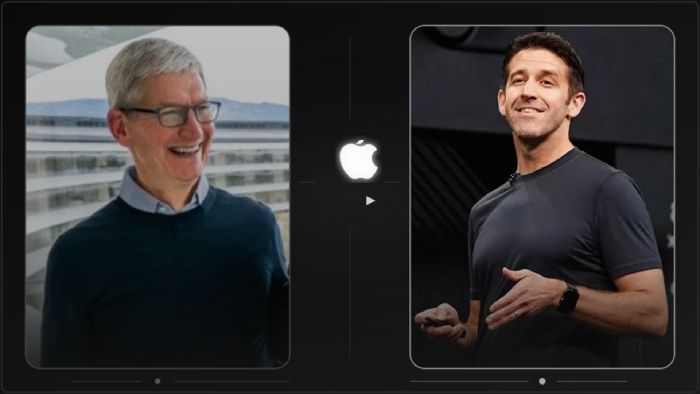
The change has been expected for some time and marks the end of one of the longest and most important CEO runs at any company. Many people on Wall Street believed Ternus would one day replace Cook as CEO, but analysts said the timing of the announcement still came as a surprise. Just last month, Cook pushed back against retirement rumors on Good Morning America. “No, I didn’t say that,” he said. “I haven’t said that. I deeply love what I do. Twenty-eight years ago, I came to Apple, and I have loved every day since.”
Cook’s Start at Apple
When Cook arrived in Cupertino in 1998, he was not brought in to be a big idea leader. Instead, Jobs, who had recently returned to Apple after years away, needed someone to repair a supply chain that many people saw as a mess. Cook quickly closed warehouses and brought suppliers together, and he is widely credited with turning Apple’s manufacturing system into a strength over time rather than a weakness.
His rise to CEO was never certain. For years, people in and around Silicon Valley believed no one could follow Jobs. It was hard to imagine someone less like the showy product genius than Cook, a careful expert in supply chain and operations.
A Legacy Built on Growth
Under Cook’s leadership, Apple grew from a market value of about $350 billion to $4 trillion, a rise of more than 1,000%. Yearly revenue also almost quadrupled, going from $108 billion in fiscal year 2011 to more than $416 billion in fiscal year 2025. Cook also turned Apple Services into a business that brings in over $100 billion a year. During his time as leader, Apple cut its carbon footprint by more than 60% below 2015 levels, even while revenue nearly doubled.
Trouble in the AI Age
As Apple turned 50 this year, it has struggled to prove it can stay a tech leader in the age of artificial intelligence, while rivals like Alphabet and Microsoft spend tens of billions of dollars to get ahead. At the end of 2025, Apple’s AI chief, John Giannandrea, suddenly left the company. Instead of building all of its own AI models in-house, Apple recently turned to Google’s Gemini to support Apple’s models. Apple’s pricey Vision Pro headset is still mostly a niche product and has not yet reached the wide popularity of earlier Apple products.
Who Is John Ternus?
He is a 25-year Apple veteran who began by designing external displays and worked under Steve Jobs early in his Apple career. In 2021, when his predecessor Dan Riccio stepped aside to oversee what later became the troubled Vision Pro, Ternus was promoted to senior vice president, making him the youngest member of Apple’s executive team.
During a university speech in 2024, he encouraged graduates to “always assume you’re as smart as anyone else in the room, but never assume that you know as much as they do,” showing confidence with humility. He also spoke about his own perfectionist nature, telling a story about arguing with a supplier because a screw on the back of a monitor had 35 grooves instead of the 25 Apple asked for. “If you’re going to spend that much time on something, you should give it your very best effort,” he said.
In a recent interview with Tom’s Guide, he showed that he is willing to take chances, admitting that the much-criticized Apple Maps launch in 2012 was “bumpy.” “If you have the vision and you stay persistent and keep working at it, you can take something with a rough start and turn it into something great,” he told the tech site.
The Road Ahead
Ternus will take over during a major year for Apple, which is expected to include updates to popular products like Siri and the iPhone. Apple will likely launch the long-awaited Siri update at its Worldwide Developers Conference in June, which could help it close the gap with OpenAI’s ChatGPT and Google’s Gemini. Bloomberg also reports that Apple is planning to release its first foldable iPhone in September.