 Jane Hill
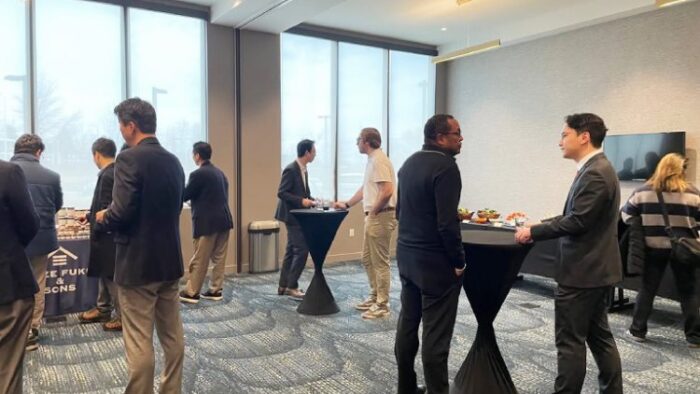
Corporate attendees are familiar with all types of events. Whether it is the same old branded lanyards, obligatory networking drinks, or an overcrowded panel Q&A that goes on for too long. If your event does not engage your guests and require something from them, they will mentally check out before the next part of the agenda. Shifting their role from passive observer to co-creator is not just a bonus; it is what distinguishes an event people remember and one they easily forget.
The Psychology Behind Participation
Gamified experiences outperform passive experiences in dwell time and recall for a pretty simple psychological reason: when people put work into something, they develop a sense of ownership over it. That ownership translates into social sharing, word-of-mouth, and the type of authentic brand love that an ad on a website rail probably won’t. This is why successful experiential marketing is not about transmitting to crowd members, but fostering a two-way relationship. The strategies below all build off that same concept: provide people a reason to participate, and your event markets itself to a large degree.
1. Collaborative Digital Murals
You can create a memorable experience by installing a large touchscreen where attendees can make individual drawings, signatures, or leave messages on a brand-new shared canvas. The mural is a collective artifact by the end of the night; something no single person created, but everyone owns a piece of.
This often works best at product launches or company anniversaries where the theme calls for community. Export the final piece, print it large, and you have created a keepsake with real visual weight.
2. Interactive Photo Booths With Drawing Tools
While traditional photo booths are still popular, interactive photo experiences tend to generate more interest among attendees. For instance, tactile technology allows guests to directly interact with the images by drawing, writing messages, or even sharing them on their social profiles. This level of engagement increases the likelihood that guests will save and share their photos.
The Scribble Photo Booth takes advantage of this concept by allowing users to doodle and draw messages directly onto their photos using the on-screen drawing tool before printing or sharing them.
3. Gamified Networking Challenges
Instead of using the passive “here’s a list of attendees” method, you can consider the following challenge. You can design an incredibly rudimentary digital passport, but make it so guests are required to visit certain booths, scan QR codes, or even participate in short activities in order to unlock a stamp or a reward at the end.
This does two things well. First, it gives introverted attendees a very clear and uncontestable reason to approach the people and the stations they’d otherwise avoid. Second, you are recording structured lead capture data at each checkpoint, far more useful than a generic sign-in sheet. 82% of corporate event organizers identify attendee engagement as their primary KPI, according to Bizzabo event platform data, which means the mechanics you build around interaction are directly tied to how success gets measured post-event.
4. Live Social Walls and Real-Time Polling
A social wall essentially displays a live stream of posts that contain a specific event hashtag. This interactive element encourages attendees to post more because they can immediately see their own posts in the stream in real time. This fosters the feeling that their posts are important at the moment and not just for future social media recaps.
5. AR-Enhanced Photo Experiences
Augmented reality overlays are not just for fun anymore. Today, corporate event AR overlays let your guests use their phone camera to activate a branded animation, unlock hidden content, or physically walk into a digital destination.
For companies, every photo or video taken is automatically seen inside the brand environment. It almost advertises itself without being intrusive. For hybrid events, where you need both virtual and live attendees to experience the same event or moment in time, they provide a possible solution.
Getting the Balance Right
All these activities are ineffective if they are added later as an event afterthought. The most successful corporate events integrate engagement into the design and development process by placing interactive stations in natural flow areas, guaranteeing that the technology is engaging but also easy-to-use, so that no personnel is needed to operate it, and making certain that absolutely every touchpoint is also a data collection point.
The lure is not just the experience or activity itself. It is a purposeful, beautifully-crafted interaction that a) drives measurable engagement, b) captures the required behavioral data, and c) leaves the participant with a psychological association to your brand.