
 Jane Hill
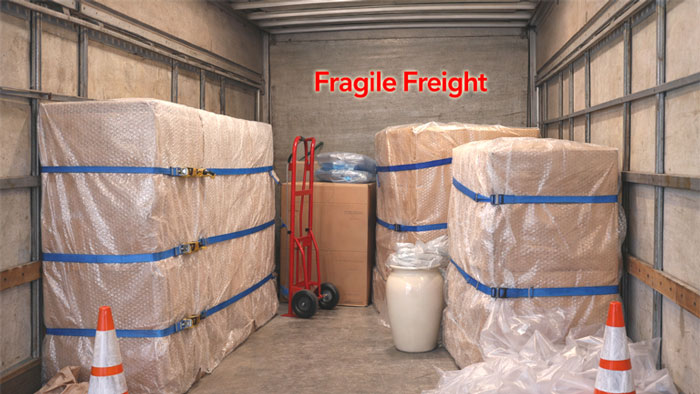
The majority of damage to shipped products is not by chance. There are typical patterns, such as damage caused by pressure due to incorrect stacking, damage due to sudden stops, and cumulative damage due to internal movements with every impact during a drive of hundreds of miles. To protect delicate items, products must be designed to resist these patterns, and to do so at every level and with materials starting from the very bottom.
Build the foundation before you wrap anything
The pallet is much more than just a plate for handling. It is the structural base for everything else to be built on. An ill-matched base – where a load overhangs by a mere two inches on any side – creates a lever arm that multiplies lateral force during cornering and braking. That two-inch protrusion can change a normal highway deceleration event into a side-impact accident that shatters windows or breaches packaging.
The center of gravity is as important as dimensions. Heavy items belong at the base, centered above the pallet’s footprint, keeping the center of gravity low. Top-heavy loads don’t need a severe road event to fail – a corner at reasonable speed would suffice.
For non-standard or awkwardly shaped fragile goods, it is necessary for the base to adapt to the load rather than the other way round. This is a problem that standard 1200x1000mm pallets will never be able to address, but where Custom Pallets in Melbourne will make all the difference. If your load doesn’t have a base that a pallet has been designed around, you are instead increasing the number of dunnage and hoping for the best.
Regarding broad, fragile products, wood outperforms plastic. Naturally, wood provides friction between layers, which resists the load’s displacement during transit, without the need for anti-slip sheets or adhesive pads.
Layer the protection from the product outward
Once the foundation is right, protection moves upward through a series of defensive layers.
Box-in-box construction is the most reliable method for high-value fragile items. The inner box holds the product surrounded by high-density foam inserts. The outer box provides a crumple zone. The gap between them absorbs impact energy before it reaches the product. Standard single-wall cartons without internal foam give you none of that.
After internal packaging, the external structure needs attention. Edge protectors and corner boards placed along the vertical edges of the load before stretch wrapping do two things: they keep the corners rigid under compression, and they distribute the pressure from the stretch wrap across a flat surface rather than concentrating it on a corrugated edge. That distinction matters because it’s the stretch wrap tension itself – applied to unprotected corners – that causes crushing in a large portion of transit damage cases.
Stretch wrapping should also lock the load to the pallet, not just hold the cartons together. Several passes around the base of the pallet before working upward tie the freight and base into a single unit. The freight and pallet should move together. If they do not, the load can walk off the pallet during transit without any visible external damage.
Test before it leaves the warehouse
Did you know that roughly 11% of products are received at distribution centers in a damaged state, with crushing and impact during transit being the main culprits? And what’s more, a large percentage of that damage could be identified before the product ever left the warehouse.
A “shake test” is a 30-second procedure. Just lift the packaged product, hold it at waist level, and give it a brisk shake in different directions. If you hear anything shifting inside, your internal dunnage isn’t up to the job. Your void filler (whether foam, airbags, or crumpled paper) should eliminate all internal movement. If it can jiggle around in your hands, it will jiggle all the way across eight hundred miles of highway.
For high-value shipments, g-force indicators on the outer packing perform two functions. They indicate if the product was dropped or sustained an impact above a predetermined level, and they act as a carrier for behavior modification. Packages marked with “mishandling is being recorded” stickers are treated more gently.
Protect the load through to final delivery
Goods that travel over long distances go through various transfer points before being finally delivered. Each transfer point is a potential risk, and the last mile, where human effort is involved in handling the goods, has the highest rate of damage during the entire transportation process.
While it is important to label fragile items, it is equally important to ensure that labels are placed in such a way that they are easily visible and understood by the handlers. Labels placed only on one side can be missed. Hence, it is preferable to have labels on all four sides and the top of the package. It is also a good practice to use symbols along with text, as not all handlers may be able to read the language on the label.
In the case of high-value items, using a crate for packaging offers much better protection than cardboard packaging. A timber crate that is designed as per the internal dimensions of the product helps in transferring the load to the structure and not to the product inside.
The shipping process as a system
The protection of fragile freight is compromised if we view it as an issue with packaging rather than a structural one. The pallet, packaging layers, wrapping, and external marking must all operate as one system intended to endure the physical demands of long-haul transport.