 Kriti
Kriti
Deciding to sign a long-term commercial lease seems like a human thing to do. It is a way to show your team, your investors, and yourself that you are determined to stick around. But depending on the kind of business you’re in, committing your business to being in a specific building at a specific address for the next five or even 10 years can be the exact opposite of strategic.
Long-term leases are financial anchors, not foundations
A typical commercial lease is usually between five and ten years long. However, during that period, your business will inevitably change. Your circumstances, the market, your number of employees, and even the cities in which you operate may all be different. But the lease you signed stays the same.
When you enter a conventional commercial real estate contract, essentially, you are changing a volatile expense for a stable one. This is an issue when your growth is not predictable. For example, a startup that secures a major deal could find itself needing to expand its space significantly in the next six months. Conversely, a company that loses a client may need to downsize. In neither situation could an existing lease comfortably accommodate your needs, and terminating it early will likely incur costs.
Making the switch to an agile workspace means moving from CapEx to OpEx. In other words, you are swapping out your monthly lease liabilities, which tie up your capital long-term, for payments that cover only what you are currently using. That capital does not just vanish – instead, you can reinvest it in new staff or products, or as a rainy-day fund for your business.
Supporting a distributed workforce without building an empire
Hybrid work has changed what employees expect from their employers, and it has changed what smart employers offer in return. A team does not need everyone in one building. It needs people to have access to professional environments wherever they are based.
This is where satellite offices and regional hubs become practical tools rather than perks. A Flexible coworking office MN gives Midwest-based employees a professional home base – meeting rooms, reliable fiber internet, and a workspace that doesn’t look like a kitchen table – without the company signing a 10-year lease in a city it may or may not be committed to long-term.
Companies are beginning to treat workspace flexibility the way they treat cloud computing. You use what you need, where you need it, and you do not build infrastructure that you will eventually have to maintain or abandon. It helps to trim down wastage from the company’s perspective, whilst also making a huge gesture to employees that their flexibility and time are more valued as part of the company. This can help to improve retention and employee contribution without making a single real change.
Agility is not just about desks
People often simplify flexible office space as just the physical furniture – a hot desk here, a shared kitchen there. However, that description doesn’t capture what teams are really purchasing.
When a business enters an agile workspace, it removes the heavy lifting of building management. You no longer have to worry about utilities, cleaning, security, internet connectivity, equipment upkeep – the works. The facilities management strain, unnoticed but constantly draining HR and operations resources in traditional offices, disappears.
That’s a true cost savings, even if it doesn’t emerge in the ‘cost per square foot’ comparison. The cost per square foot of a flexible space is typically higher than that of a conventional lease. The total cost of occupancy, taking maintenance, insurance, build-out, and overhead into account, is frequently lower.
The office still has to be worth showing up to
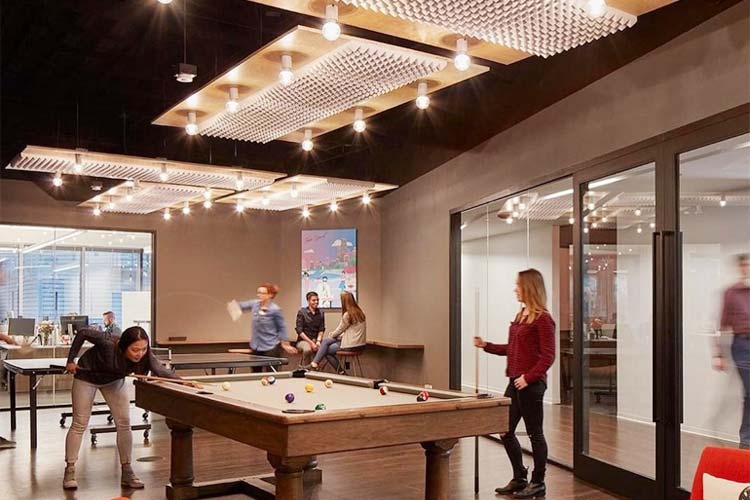
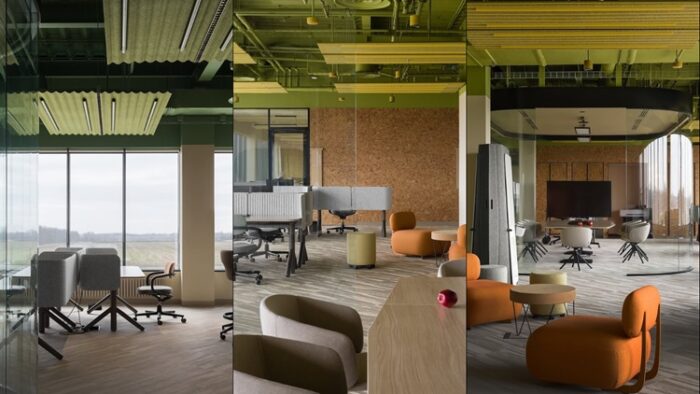
Flexibility doesn’t mean formless. A well-designed agile workspace still needs to justify the commute for a hybrid team that has gotten comfortable working from home. That means offering something a home office cannot: private focus zones for deep work alongside collaborative social areas that make in-person time feel different, not just louder. The modern flexible office is designed around the idea that people come in for specific reasons – team sessions, client meetings, the kind of work that genuinely benefits from being around other people. If the space doesn’t support those specific modes, employees won’t use it, and the company loses the cultural glue that in-person time is supposed to provide.
What this means for growing teams right now
Businesses opting for flexible office space do not make savings at all costs. They are taking a risk in the hope of being able to expand, change direction, and have their employees where they need to be, which outweighs the risk of staying where they are with a long lease. As a CFO, it is a matter of reducing the risks. As an HR director, it’s about attracting and retaining talent. As a team still in the process of defining their trajectory over the next two years, it’s the best alternative.