 Jane Hill
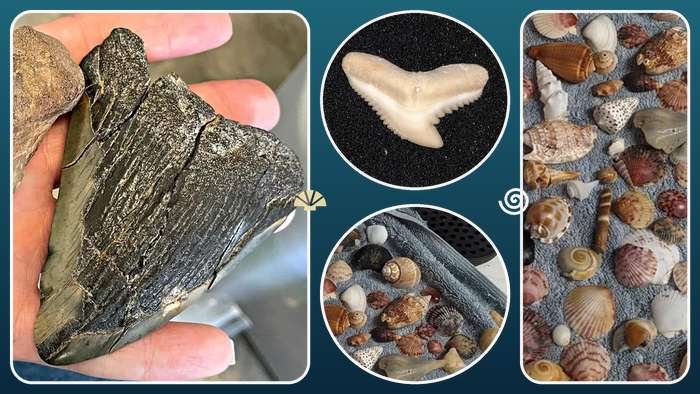
Few vacation activities are as simple or as addictive as walking a beach with your eyes on the sand. On Florida’s Gulf Coast, that walk can turn up delicate shells, sand dollars, and even fossilized shark teeth that are millions of years old. It costs almost nothing, and it works for every age.
A little planning makes it much more rewarding. Here is where to look, when to go, how to find shark teeth, and the rules you need to know before you take anything home.
Why the Gulf Coast Is Great for Shelling
The Gulf side of Florida has gentle waves, shallow water, and sandbars that act like natural collection points. Shells drift in, settle, and wash up on the shoreline in layers. In the Sarasota area, that means a wide mix of finds, including:
- Lightning whelks
- Sunray venus clams
- Olive shells
- Scallops and cockles
- Fighting conchs
- Coquinas
- Sand dollars, which many shellers consider a prize
Part of the fun is that every walk is different. Tides, wind, and weather change what shows up from one day to the next.
Best Spots Near Siesta Key and Sarasota
Sarasota’s shelling guide points to several favorites in the area:
- Point of Rocks (Siesta Key). Rocky outcrops and tidal pools just south of Crescent Beach collect shells.
- Turtle Beach (Siesta Key). The coarser sand often gives up larger finds than the main beach does.
- North Lido Beach. It tends to be less crowded, with more variety.
- Nokomis Beach (Casey Key). Near the north jetty, it is considered one of the area’s best shelling spots.
- Big Pass sandbars. Between Siesta Key and Lido Key, new shells collect here regularly.
If you want to go further afield for fossils, Venice Beach, Manasota Beach, and Blind Pass Beach Park are known for shark teeth.
When to Go
Timing matters more than most beginners expect. A few simple rules help:
- Go early. Shells wash ashore overnight, so the early morning hours are the least picked over.
- Watch the tide. About an hour before and after low tide is a good window, when more of the sand is exposed.
- Check after storms. Rough weather can pile up shells, coral, and sea fans.
- Walk past the crowds. A few minutes beyond the busiest access points can make a big difference.
Follow the high tide line, where the sand turns from wet to dry. That is where shells collect in a natural row.
How to Find Fossilized Shark Teeth
Shark teeth are one of the most exciting finds on the Gulf Coast. According to the Florida Museum of Natural History, parts of Florida were underwater on and off for millions of years, and most fossil teeth come from sedimentary rock that was once shallow seafloor. Water erodes that material and exposes the teeth, which is why beaches and creek beds are good places to search.
Some tips:
- Look at the low tide line. That is where the waves can expose teeth.
- Look for dark triangles. Fossil teeth are often black or gray.
- Think small. Megalodon teeth are rare. Sifting sand through a screen often turns up tiny teeth less than a fifth of an inch tall from sharpnose, nurse, and angel sharks.
- Bring a sifter. A basic scoop or screen can turn a slow walk into a treasure hunt.
The Florida Museum also notes that shark teeth are specifically exempt from the usual fossil permit requirements. Digging, though, is often discouraged or prohibited on public land, so only search where you are allowed to be.
Know the Rules Before You Collect
This is the part many visitors skip. The basic rule is simple: never take a shell that has a living creature inside.
Florida Fish and Wildlife Conservation Commission guidance adds some important details:
- A Florida recreational saltwater fishing license is required to harvest a shell containing a living organism, even from shore.
- Rules vary by county. In Manatee County, for example, you may not harvest or possess more than two shells with live organisms per species per day. That includes sand dollars and starfish.
- Harvesting the Bahama starfish is prohibited statewide, and so is possessing a live queen conch.
- State parks, wildlife refuges, and marine sanctuaries may limit or ban collecting. Check with the park directly.
Because the rules differ from place to place, the safest approach is to take only empty shells and to check local guidelines before you go.
How to Tell if a Shell Is Alive
- Smell it. A shell with an odor probably contains an animal. Leave it on the beach.
- Check the sand dollar. Live ones are brown or purple and have fuzzy, moving spines. Dead ones are bleached white.
- Look for movement. If you see a foot, tentacle, or any sign of life, put it back gently where you found it.
Reaching the Best Shelling Areas
Some of the richest shell beds collect on sandbars and shallow flats that are hard to reach on foot. Many visitors get there by water. A private boat tour that includes shelling or shark tooth sifting stops can open up areas that most beachgoers never see, and it lets you search in calm, shallow water with a guide who knows the area.
Final Thoughts
Shelling is one of the easiest ways to slow down on a Florida vacation. Pick a good spot, go early, watch the tides, and follow the rules. You might come home with a bag of shells, a few tiny fossil teeth, and a good story. Just remember the golden rule: if something is alive, leave it where it is.