
 Kriti
Kriti
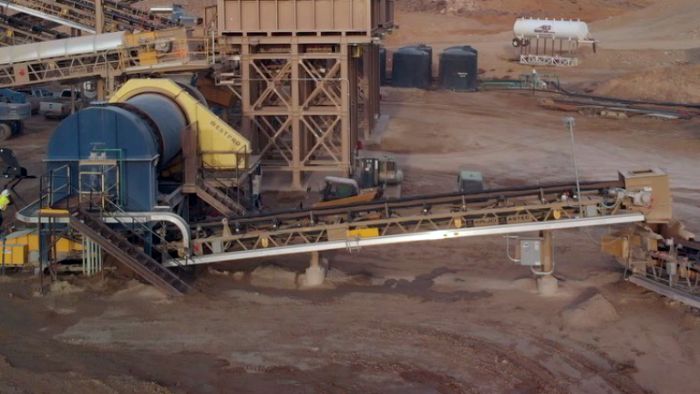
High-speed conveyor lines are not tolerant of ineffective housekeeping. If a belt is moving at 4.0 m/s or faster, carrying high-tonnage, high-impact materials like iron ore, coal, or hard rock, solutions to carryback must be more than management-based. The longer the spillage is allowed to continue. The problem becomes worse. A small amount of material over the side of the conveyor can result in a large amount of production time to clean up.
Why high-speed lines are a different problem entirely
Most of the conveyor maintenance thinking that we carried over from slower, less punishing systems. They cannot just be scaled up linearly and produce accurate results. If you take the maintenance techniques that you used on a 0.5 m/s paper machine and apply them to a 5.5 m/s coal conveyor. The system will break itself in ways that you’d never predict.
An example: maintenance staff are usually taught that dirt is a maintenance killer. Every effort must be made to keep material off of idlers by reducing friction and prolonging the belt life. This is true if the belt is moving at 0.5 m/s. If the belt is moving at 5.5 m/s, and coal is building up on the idlers. The increase in belt wear and belt cleaning significantly outweighs the cost. You want the material to exit the system as quickly as possible, at high speeds and high tonnages. It is the safest place for it to be.
Carryback: the number behind the number
Concrete data from the industry confirms this fact. Carryback can be attributed to 85% of all conveyor maintenance problems. 1% of the total material load being carried back at the secondary cleaner typically amounts to 80% to 90% of all carryback.
The available equipment options are better than ever before. They can be paid for many times over in savings generated by fewer material losses, longer component service life, and avoiding catastrophic fires or structural failures.
When you calculate the total cost of ownership properly. The cost of adequate cleaning systems is almost never the most expensive choice. The expensive choice is the inadequate system you are replacing every two years while paying for continuous cleanup labor, premature idler replacement, and production interruptions.
The multi-stage cleaning case
Factories that continue to use only one primary cleaner for high-speed lines are relying on a system. That was meant for less complex material handling operations. No matter how premium the quality, a single scraper blade cannot deal with all the issues presented by the carryback on a fast-moving, loaded belt.
Instead, properly configured multi-stage systems work together in a process. The cleaner at the primary position, mounted firmly to the head pulley and placed directly in the trajectory where the material discharge flows, works to remove most of the carryback. It does this by coming into contact with the belt before its material stream moves over it. Ejecting the majority of the fine clings to the side of the belt.
The secondary cleaners are installed in parts of the belt further down the head pulley’s belt return path. Here, the belt is generally free of a large portion of the main discharge flow. Secondary cleaners address anything left behind by the primary cleaner. Usually, a small, sticky film of fine material that survives the first scrape. For belts handling wet or inherently sticky materials, a brush, tertiary cleaner, or water-assisted scraper may be used as a third scraper.
Choosing a high-quality belt scraper complete with an automatic tensioning system serves. As the first and most important line of defense in ridding your belt of carryback. Without a blade that consistently stays in contact with the belt in the primary position. The secondary cleaner is being overworked to do the job of a failed primary scraper – rather than serving as a second-stage cleaner itself. The problem extends downstream with escalating contamination issues.
Blade material selection is not optional engineering
Proper blade material selection is critical for both your primary and secondary belt cleaning applications. Incorrect blade choices not only reduce your clean-up performance. But they also wear out your belt faster, dramatically increase the risk of splicing damage, and cause your blades to wear out ahead of schedule, before yet more costly mechanical repairs become necessary.
The majority of primary belt cleaners are supplied with polyurethane blades. We recommend this material for almost all applications. Polyurethane blades are essentially the halfway house between metal and rubber; still rigid and durable. They nonetheless have a measure of flexibility which allows them to closely match the shape of the belt surface, and – within reasonable limits. Track in the belt’s lateral movement without excessively wearing the belt surface. Their flexibility under pressure also makes them ideal for not damaging the belt when encountering mechanical belt splices.
Yet tungsten carbide blades are rigid and could easily eat into your belt if not managed properly. They also come at a much higher price point and are more difficult to customize if working with mechanical splices. They are ideal for your secondary position if you have the budget and the appropriate material conveyed.
Mechanical splices and the damage they cause
Mechanical splices continuously damage scraper systems. Whereas a vulcanized splice is a single, level part of the belt surface. A mechanical splice is a raised piece of hardware. A belt clip or hook that is several millimeters higher than the face of the belt. At the speeds of a modern conveyor, those raised edges can pack a significant impact when they hit a stationary scraper blade.
If the blade is rigid or poorly tensioned, this means chipping, cracking, and (in the extreme case) a piece of the blade is launched into the conveyor structure. Even in the absence of catastrophic failure, the life of a mechanical splice is cut down by orders of magnitude, and you get inconsistent blade contact between splice events.
The skived splice, where the belt cover is tapered down at the splice to minimize the profile, is the most elegant option where the belt asset will support it. Where it will not, the scraper system must use spring-loaded, articulating blade holders that allow individual blade segments to be pushed out of the way by a splice. But which return immediately to their cleaning position afterwards. These holders are more expensive than fixed holders, but they are the only way we have ever overcome splices on high-speed lines.
Tensioning systems: where most facilities lose the maintenance battle
Improper pressure of the blade against the belt during operation is the number one cause of carryback bypass in operating conveyors. Not degraded blades – improper tensioning. Manual tensioners mechanically cannot keep contact force consistent as the blade wears: when a correctly tensioned blade loses 50% of its thickness, the contact force is reduced by 75%. The result is about one week of effective cleaning after the service until the blade becomes too ineffective. Then, with about three weeks left until the next scheduled service, all the other problems with carryback – increased maintenance, reduced belt life, excessive dust, and product loss – add up.
Spring and pneumatic tensioners remove any manual adjustment, so the blade always applies consistent force regardless of its thickness. The pneumatic tensioner can be set with a calibrated pressure gauge, giving crews a number to aim for instead of a “that feels about right” eyeball estimate. Tensioners arrive from the manufacturer calibrated to between 39-48 kpa (5.7-7psi), depending on the manufacturer and the capabilities of the plant’s air system. Most conveyor belt scraper designs also give a number of inches that the scraper should be placed from the head pulley, with a recommended starting point of 4-5 inches. Minimum pressure and maximum extension settings are determined by the scraper and belt cleaner blade manufacturer to prevent overloading components.
Safe access and inspection protocols
Designing the cleaning system right is one thing, what’s more critical is to provide maintenance access, and it’s the access you build in from the first day. Access to service scrapers by entering a confined space inside the chute structure is a serious safety risk and simply does not ever happen consistently. When the decision is made to inspect scrapers because a technician sees that the blade seems to be wearing poorly, it’s already too late. Worn blades have already exceeded their service life; there’s no longer enough blade face left to do the job no matter how new the edge is, and carryback has already been allowed to increase. Slide-out service tracks that easily and safely allow extraction of blade cartridges from outside the chute structure immediately eliminate this access barrier. Chute structure scrapers that are simple and safe to access are standard operating equipment rather than the exception.
The other half of this equation is that you have to be looking. Daily visual inspection of the wear pattern on the blade cartridge is the early detection system of the conveyor for unnecessary belt wear, and it’s also the only shield between the belt itself and catastrophic belt damage. A blade cartridge that wears faster or sooner than the other blade cartridges on the belt is an early warning system for the belt having a problem. That problem will be either that the belt is tracking or that the belt is cupping. This is something you want a blade to find and not a camera. Access to check the wear pattern of blade cartridges and the recognition that checking that wear pattern is a routine, not an event, goes hand in hand with the absolutely required design features that eliminate the constant hidden cost of spillage cleanup while maximizing the usability of your production floor.