
 Jeremy Bowen
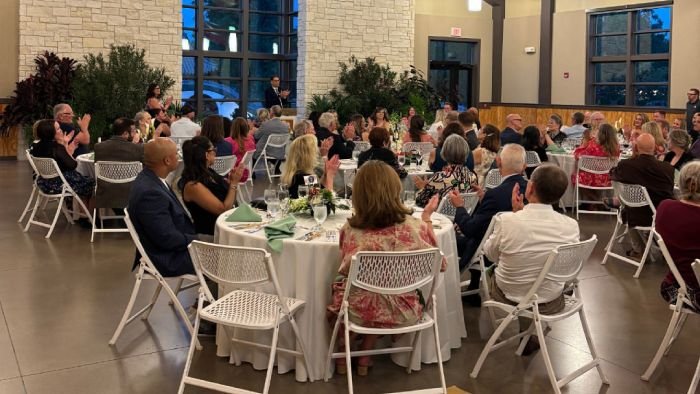
The vast majority of event budgets crash and burn for the same reason most bad investment portfolios crash and burn. The money gets spent on what feels safe rather than what actually impacts the bottom line. What’s the #1 cause of business event failure? Overspending? Or misappropriation of the spend? Overinflating on the venue in hopes that chandeliers and marble will get the credit for attracting the attendees, or underspending on the food and beverage?
Start With the Objective, Not the Spreadsheet
First and foremost, it is not about the money. It is about the strategy. Before you touch a single dollar figure, define what the event is supposed to do for the business. Lead generation, client retention, brand visibility, and internal education all pull the budget in different directions. A lead-gen event needs a bigger sponsorship and tech stack to capture and qualify contacts. A retention-focused event needs more spend on networking design and fewer dollars on broad-reach marketing. An education-first conference needs deeper investment in breakout content and speaker variety. Since attendees are there to learn, not to be entertained for two days.
Skipping this step is why so many events end up with generic budgets that look identical regardless of purpose, same venue tier, same catering package, same swag line, different logo. If you cannot say in one sentence what the event needs to accomplish for the business. You cannot judge whether any given expense earns its place.
This matters because 80% of event marketers say live events are the most effective marketing channel for achieving business goals (Bizzabo). That statistic only holds if the budget is built to serve a specific goal. Treat the event as a growth investment with a return to measure, not a cost center to minimize.
Put Content First, Before Venue or Décor
What people remember about an event is the content. The ideas they heard, the stories that moved them. The conversations that challenged their thinking. Certainly not the chair covers, the branded lanyards, or the size of the ballroom. In fact, they barely remember what the room looked like, let alone whether the coffee was too hot or too cold.
So why is content what they starve first, in the planning, in the budget, and in the space? It is easy to blame logistics, because those are the most tangible parts of the event. And to be fair, even under the best of conditions, content is still the hardest to plan, as it can never be fully laid out, right down to the smallest details. It is messy, it is unpredictable, and because of that, it is sometimes ignored until the last possible moment.
The 70/20/10 Framework For Allocating the Rest
Once you’ve protected your content budget, the rest of the money only works if you give it some structure. A successful split is probably 70/20/10:
70% should be spent on things you already know work: your venue, most of the actual content (as opposed to the sessions themselves), and core AV production. These should be the largest and easiest categories to manage because they have the longest track record. You are reasonably sure the quality of these categories significantly impacts satisfaction. You also know what kind of experience certain quality levels will deliver. How the perceived risk/reward changes with trying to push values higher or lower.
20% should be spent on things that have differentiated a good experience from an amazing one: networking design, food and beverage quality. Maybe some entertainment at connection points in event flow. These are things that work in the sense that if your overall program is high quality, these choices can transform an individual event from good to unforgettable. They are all things you shouldn’t be removing if you’re not succeeding. But they are clearly in second place to whether or not efforts under the “70” bucket were effective at driving the elements of success in the first place.
10% should be spent on experimental stuff. Launch that new app, try out that category of partner or sponsor that you have never taken money from before, radically adjust some session design norms and good practice. Spend money here to answer the question about whether to spend a lot more in this category next year or cut your losses and stop spending anything. But minimize the spend necessary to learn this. Spend 10%, not a quarter of what you’re spending on the category.
Venue and Catering: Cap it, Don’t Chase it
Location and food and beverage should eat up about 30-35% of the entire budget combined. Not separately. Combined.
This is where many budgets swell beyond logical limits. Because location and catering are the easiest categories to visualize and the most comfortable for stakeholders to stack against competitor events. A nicer ballroom looks attractive in pictures. Premium catering shows up in social media posts. But post-event data regularly uncovers the same pattern that surprises people the first time they see it. A mid-tier venue paired with a strong keynote speakers line-up outperforms a luxury venue with an average speaker roster, both in session ratings and in repeat-registration rates the following year.
Speakers Before Swag, Every Time
If you’re going to protect one category above all others. It is speaker and breakout talent. Reserve that spend before you finalize anything related to decor, gift bags, or stage dressing. The reasoning isn’t sentimental; it is tracked. Post-event NPS and individual session ratings correlate far more closely with speaker quality than with any physical touch attendees walk away holding. A branded tumbler doesn’t move a satisfaction score. A keynote that reframes how someone thinks about their job absolutely does.
Swag has a place, but it’s a low-leverage one. If your budget review shows swag spend competing with speaker fees for the same dollars, that’s a signal the allocation order got flipped somewhere upstream. When you’re building out the talent roster and comparing options for high-caliber keynote speakers, do it early enough in the budgeting cycle that fee negotiations happen before, not after, you have locked in less important line items.
Breakout sessions and workshops deserve their own slice of this same reasoning. They are where attendees get the depth a single keynote cannot deliver. They are often where the most engaged, highest-value attendees spend the bulk of their time. Underfunding breakouts to protect a flashier general-session budget usually shows up as a satisfaction gap in your post-event data. Specifically among your most valuable segment: repeat attendees and decision-makers.
Let Sponsorship Fund the Content, Not Just the Party
Many times, companies treat sponsorships as an afterthought or a completely separate initiative from how the overall budget is planned and spent. If you treat sponsorships as a part of your overall budget strategy, you will be more successful in landing higher quality (and often overall more) sponsors. For leveraging sponsors to improve your on-stage program, try routing all sponsorships that have no product placement value (i.e., no exhibition hall, no sponsored sessions) to pay your speakers. This is not just early-stage advice; plenty of mature event teams do this too to pay their MCs, keynotes, etc.
Technology Spend is a Data Investment, Not Just a Cost
Budgets for registration platforms, Wi-Fi, event apps, and survey tools are often prepared with a defensive approach, for example, “what’s the minimum we can spend to make this function?” But that’s not really what this category is about. If you are doing this right, this is how you turn this year’s event into next year’s better-informed budget.
Each bit of registration data, each app tap, each post-event survey response is your evidence. Without it, you are left to rebuild next year’s plan allocation based on your gut and voices around the table. With it, you can build your defense case based on what your attendees already did. Those are the numbers that show exactly which sessions presented the highest results. Which networking opportunities your guests enjoyed the most, and when they stopped enjoying themselves. That’s the kind of data that will convince others as to why you made those changes.
Design Networking on Purpose
Business event participants do not only attend for the presentations. They come to meet people who can contribute to their business, whether they are future clients, partners, or peers facing similar challenges. When participants are asked why they attended, “quality of connections” is usually one of the top responses.
However, networking is often the aspect of the event with the least planning and resources. It is seen as what naturally occurs between sessions. It is often paid for by whatever is left in the catering budget. Activities with a structured approach, such as assigning specific tables based on industry or role, hosting facilitated discussions, or incorporating speed-networking sessions, tend to be much more highly rated by attendees in terms of perceived value. Be sure to set aside funds to facilitate and organize networking activities during your event.
Hybrid Components Stretch Reach Without Stretching Cost Proportionally
If your event goals involve reaching a broader audience, hybrid and virtual elements should be planned. It is included in the overall budget, rather than being seen as an additional cost added to the physical event. The extra costs associated with adding virtual participants are relatively low compared to the costs per participant attending in person. Therefore, hybrid events are a good option if you want to increase your brand’s visibility or generate more leads, rather than focus on intense face-to-face interactions.
Keep 5-10% in Reserve, and Treat it as Protection, Not Padding
Surprise costs are an inevitable part of every event. The AV system needs a better upgrade in the middle of setup. A speaker’s travel plans fall through, and you have to pay a rebooking fee. Catering minimums had to be renegotiated. A 5-10% overage reserve is not the cushion against incompetence, poor procurement, or scope creep that the accountant in you has always wanted to cut. It is there to prevent a single last-minute overage from gutting a part of the event that everyone would notice.
Without it, the cost of an unexpected line item just gets silently absorbed by an experience line that can be reduced without canceling the florist. You suddenly have fewer breakout facilitators. The AV guy scales back the replacement gear. The networking bar is open for 15 minutes less. With the reserve pre-committed. It means that you are going to cut something you already planned on…a lot easier to justify on the numbers, isn’t it?
Budgeting is not about spending less. It is about making sure every dollar is doing something measurable in service to the content, attendee experience, and, by extension, the business objectives that brought everyone together in the first place.